



Description
✅ Marshall Brand Warranty — Authorised Marshall Partner · 100% Genuine · Mahajan Electronics Since 1981
Dolby Atmos + DTS:X. Dual subwoofers + 4 passive radiators. Bluetooth Auracast + Wi-Fi + Google Cast + AirPlay 2 + Spotify Connect. Marshall App. 24-hour delivery Delhi NCR.
Dolby Atmos. DTS:X. Dual rear-facing subwoofers.
4 passive radiators. Bluetooth Auracast + Wi-Fi + AirPlay 2 + Google Cast + Spotify Connect.
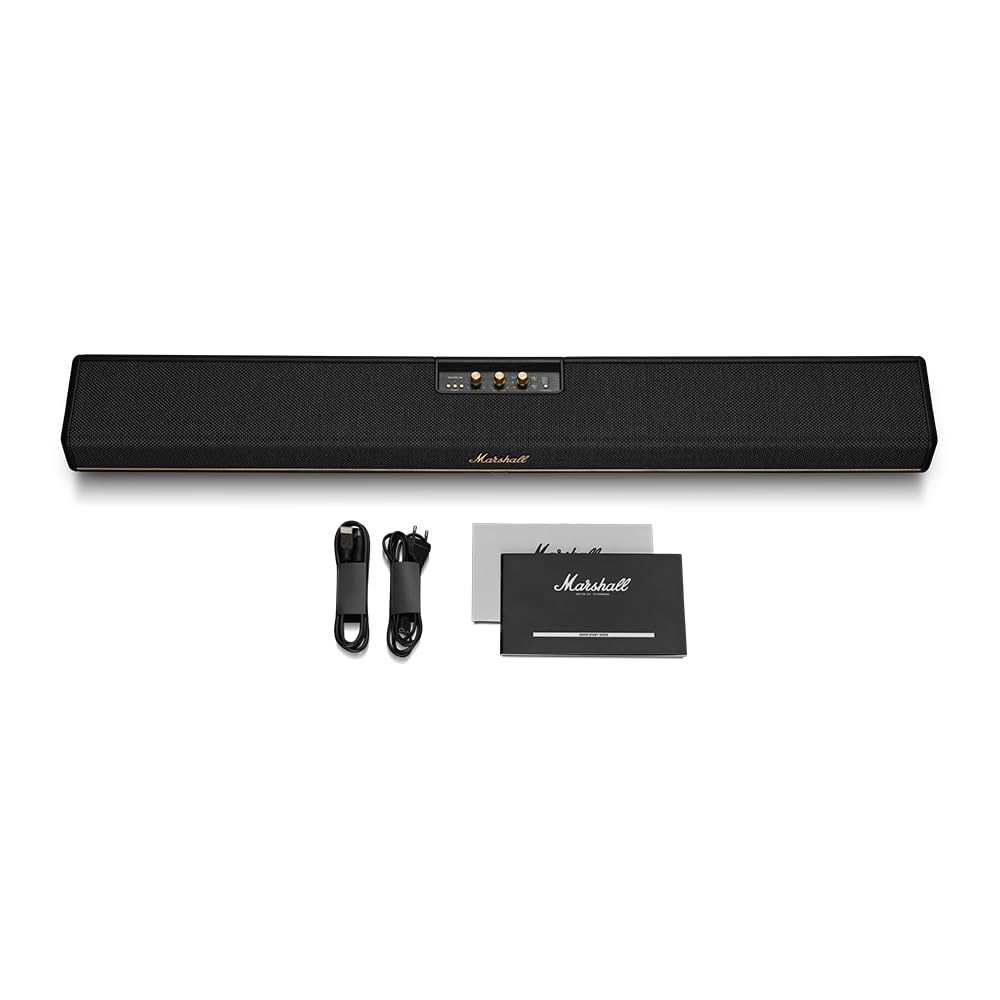
Marshall App. 4 sound modes. Dual HDMI. Wall mount. 109 cm.
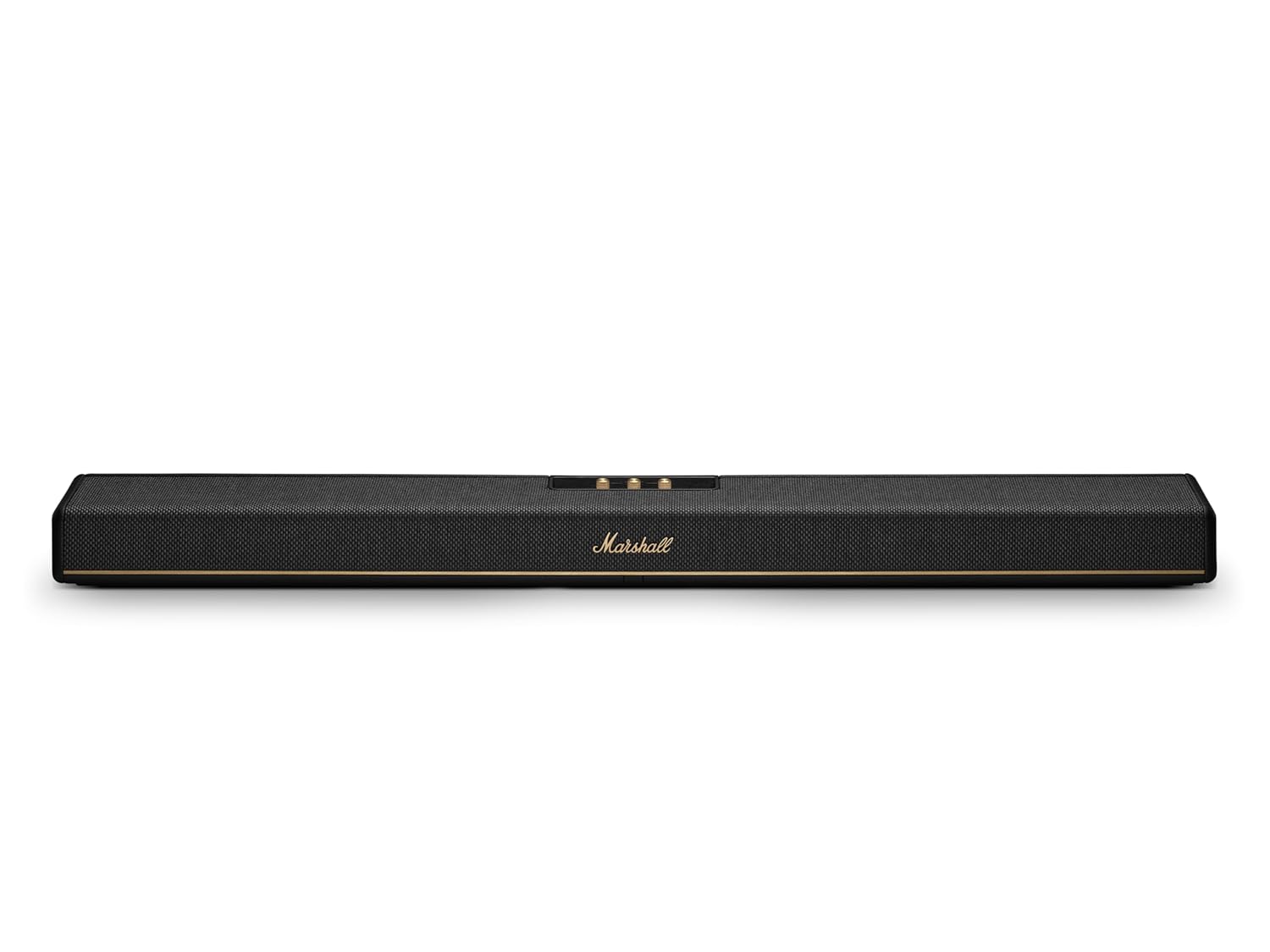
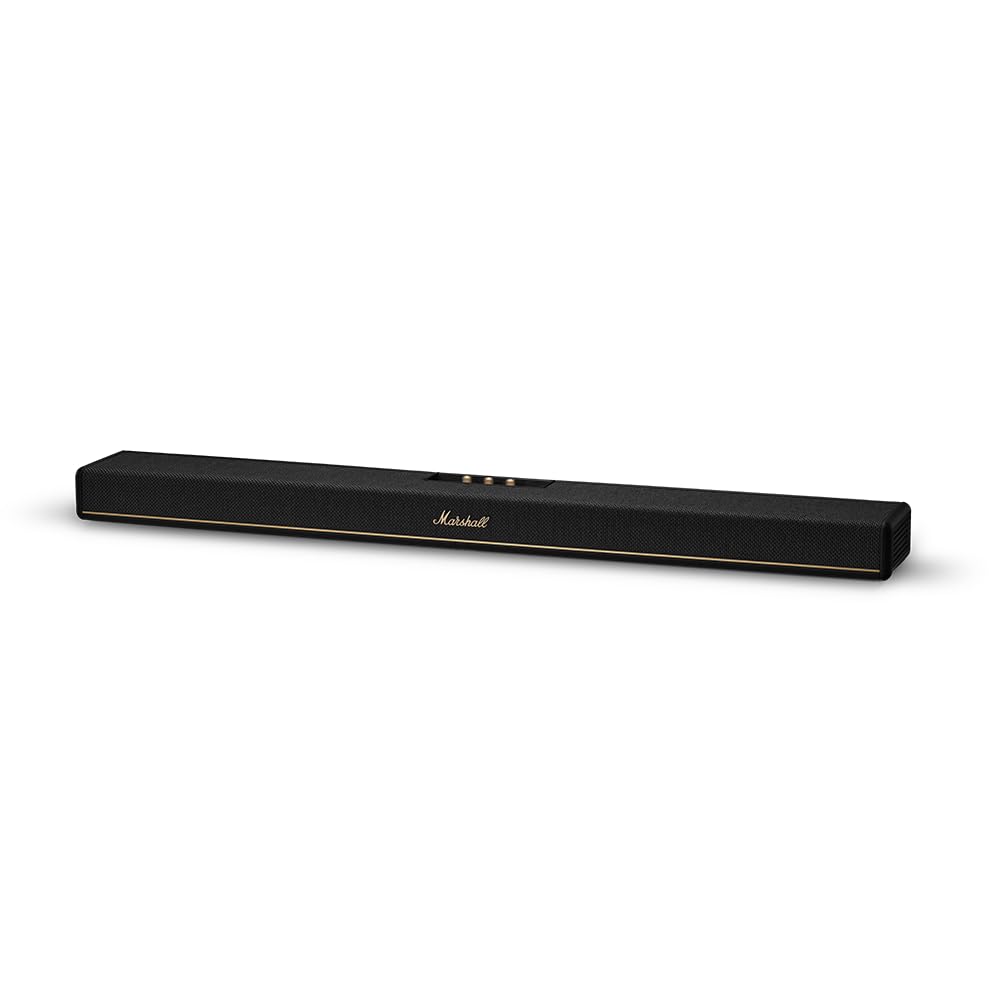
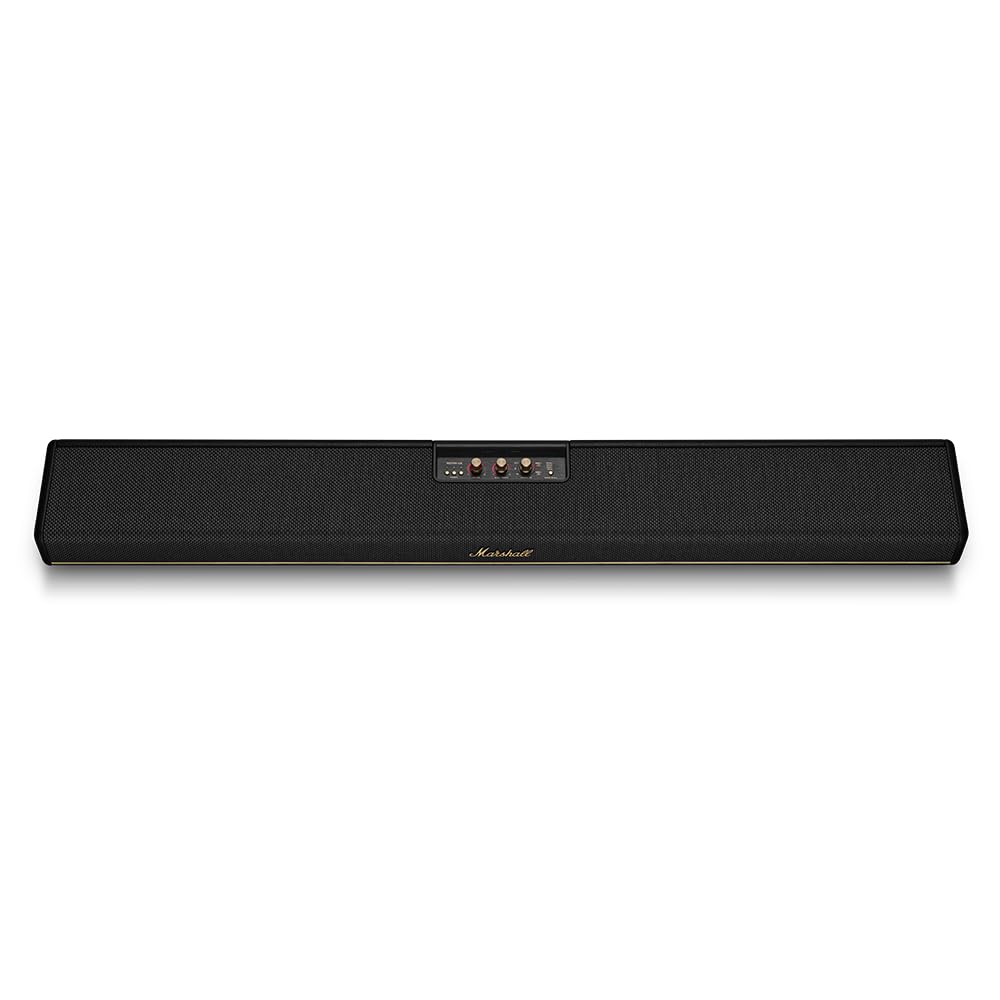
The Marshall Heston 120 is the definitive home cinema soundbar from the world's most iconic audio brand — Dolby Atmos and DTS:X place sound objects above, behind, and beside you in true 3D space; dual rear-facing subwoofers with 4 passive radiators deliver distortion-free bass at cinema volume; the most complete wireless streaming stack available (Bluetooth Auracast, Wi-Fi, Google Cast, AirPlay 2, Spotify Connect, Airable internet radio); Marshall App with EQ, room calibration, and sound profiles. 109 cm. Wall mount. Legendary Marshall aesthetics.
🎬 Object-based 3D audio — how Atmos and DTS:X differ and why having both matters
Dolby Atmos
- Used by: Netflix, Disney+, Apple TV+, Amazon Prime, Blu-ray
- Object-based: each sound element has 3D coordinates
- Renderer places sounds above, behind, beside in real time
- Up to 128 simultaneous audio objects
- Best for: Hollywood blockbusters, OTT streaming
- Heston 120: full Atmos decoding + rendering
DTS:X
- Used by: 4K Blu-ray, gaming, some streaming platforms
- Object-based: codec-agnostic, adapts to any speaker layout
- Dialog enhancement built-in — voice clarity in any mode
- Competitive with Atmos in gaming audio tracks
- Best for: gaming, 4K disc media, DTS content library
- Heston 120: full DTS:X decoding + rendering
Object-based audio vs channel-based audio — what Dolby Atmos and DTS:X actually do differently
Traditional surround sound formats (Dolby Digital 5.1, DTS 5.1, Dolby TrueHD 7.1) are channel-based — the audio mix assigns specific sound elements to specific speaker channels (front left, centre, front right, rear left, rear right, subwoofer) and the playback system reproduces those channel assignments. The system cannot place sound "between" channels or simulate height — a helicopter sound mixed to the front-left and right channels will appear to come from approximately 30° above the screen, regardless of whether the visual shows the helicopter directly overhead. Object-based audio, as implemented in Dolby Atmos and DTS:X, fundamentally changes this: each sound element (a raindrop, a dialogue word, an explosion, a flying object) is encoded with real-time 3D position metadata — X position (left-right), Y position (front-back), and Z position (height) — rather than being pre-assigned to a specific speaker channel. The Heston 120's audio renderer reads this position metadata and calculates which physical drivers should reproduce each object at which volume and timing to create the illusion of that object at its specified 3D coordinates in the room. For a scene where rain falls around the listening position: Atmos metadata places individual raindrop sounds at specific coordinates around and above the listener in real time as the camera angle changes; the Heston 120's driver array and DSP processing renders these coordinates through its available drivers, including upward-firing or side-firing elements that create height perception. The practical perceptual difference for an Indian household watching, say, a Marvel film on Disney+ in Dolby Atmos: sound effects that the director intended to be above or behind the viewer actually appear in those positions rather than being collapsed to the screen plane — the experience is genuinely spatial rather than just wider.
Dual rear-facing subwoofers + 4 passive radiators — Marshall's bass architecture for a 109 cm soundbar
The Heston 120's bass system combines two active subwoofer drivers with four passive radiators — an acoustic architecture that addresses the fundamental challenge of producing deep, room-filling bass from a slim 14 cm deep soundbar form factor. Active subwoofer drivers are powered by the amplifier and directly generate bass frequencies through their cone excursion — the 109 cm Heston 120's dual rear-facing placement means the bass energy from each driver is directed toward the wall behind the soundbar, creating a wall-loading effect where the reflected bass energy combines with the direct bass to increase effective low-frequency output without requiring the driver to work as hard as a forward-facing driver of the same size. Passive radiators are unpowered — they are mechanically coupled to the enclosure air volume and resonated by the pressure fluctuations created by the active drivers. Each passive radiator effectively acts as a tuned acoustic mass-spring system: it resonates at a specific frequency determined by its mass and the enclosure's compliance, adding output at and below that tuning frequency where the active drivers' direct output is rolling off. Four passive radiators, tuned to complement the two active drivers' frequency response, extend the effective bass reproduction to lower frequencies than the active drivers alone could achieve within the soundbar's physical cabinet volume. The practical result: the Heston 120 can produce cinema-level low-frequency effects (LFE, the ".1" in 5.1 or 7.1 channel designations, which carries explosion rumble, bass drops, and subwoofer-specific content) that most soundbars at comparable physical dimensions cannot reproduce, without requiring a separate external subwoofer unit that adds cabling and floor space.
Six wireless protocols — the most complete streaming stack and why Bluetooth Auracast is the newest addition
The Marshall Heston 120 supports six distinct wireless streaming methods — more than any other audio product currently in the Mahajan Electronics catalogue. Each protocol serves a different use case. Wi-Fi streaming (via Google Cast and AirPlay 2) provides the highest audio quality of all wireless methods because Wi-Fi's bandwidth supports lossless or high-bitrate audio transmission without the compression required by Bluetooth — streaming Tidal Masters or Apple Music Lossless to the Heston 120 via AirPlay 2 or Google Cast delivers audibly better resolution than Bluetooth transmission of the same tracks. AirPlay 2 is Apple's protocol — iPhone, iPad, Mac, and Apple TV users can stream and multi-room sync using the native iOS audio share. Google Cast handles Android, Chromecast, and YouTube — YouTube Music and Spotify on Android phones cast directly to the Heston 120 without a separate app. Spotify Connect operates independently of the phone's Bluetooth — the Heston 120 connects directly to Spotify's servers when on the same Wi-Fi network, allowing the phone to be used for other tasks or even turned off without interrupting playback. Airable internet radio provides access to 30,000+ global radio stations streamed directly to the soundbar. Bluetooth with Auracast is the most recent wireless addition — standard Bluetooth audio is unicast (one device to one receiver); Auracast is a Bluetooth LE Audio broadcast standard that allows the Heston 120 to broadcast its audio simultaneously to multiple Bluetooth LE Audio-compatible receivers in the vicinity, enabling shared listening scenarios (for example, multiple people with Auracast-compatible wireless earbuds receiving the same soundbar audio without any of them pairing individually).
Marshall App with room calibration — how software optimisation addresses the biggest limitation of fixed-position soundbars
The single greatest acoustic limitation of any soundbar is that it is a fixed-position audio system deployed in rooms with vastly different acoustic properties — a 109 cm soundbar placed in a furnished 12×15 ft bedroom with curtains, a carpet, and upholstered furniture produces a fundamentally different acoustic response than the same soundbar in a 20×20 ft open-plan living room with marble floors, glass windows, and bare walls. The soundbar's factory voicing (its frequency response curve as designed) cannot be optimal for both environments — the living room's hard reflective surfaces will produce excessive high-frequency brightness and flutter echo, while the bedroom's absorptive surfaces may reduce the apparent bass and treble presence. The Marshall App's room calibration feature uses the soundbar's built-in microphones (or the phone's microphone, depending on the implementation) to measure the acoustic properties of the specific room — it generates a test signal, records how that signal sounds at the listening position after interacting with the room's reflective and absorptive surfaces, and calculates a correction EQ curve that compensates for the room's deviation from the ideal target response. Applied to the soundbar's output, this correction EQ effectively customises the Heston 120's frequency response for the specific installation environment, producing a more accurate and balanced sound in the actual room than the factory voicing achieves. Combined with the app's manual EQ controls, sound profile presets, and firmware update capability, the Marshall App positions the Heston 120 as an evolving audio system that improves with use rather than a fixed-performance appliance.
📡 Six Wireless Streaming Protocols — complete connectivity
Bluetooth + Auracast
Standard BT pairing + LE Audio broadcast to multiple receivers
Wi-Fi Streaming
High-bitrate audio — lossless quality possible
Google Cast
Android, YouTube, YouTube Music — cast directly from app
Apple AirPlay 2
iPhone, iPad, Mac, Apple TV — multi-room sync
Spotify Connect
Direct Spotify server connection — phone-independent playback
Airable Internet Radio
30,000+ global stations streamed directly to soundbar
🎛️ Four Sound Modes — optimised for each use case
Movie Mode
Enhanced surround processing + dynamic bass boost — cinematic immersion for action and drama
Voice Mode
Centre channel clarity boost — clearer dialogue during complex soundtracks or accented speech
Music Mode
Balanced stereo tuning — accurate reproduction for music streaming and albums
Night Mode
Compressed dynamics + reduced bass — full audio experience at low volume for late-night viewing
🎯 Ideal for
| Brand | Marshall |
| Model | Heston 120 |
| Type | Premium Soundbar with Wireless Subwoofer |
| Audio formats | Dolby Atmos · DTS:X |
| Bass system | Dual rear-facing subwoofers + 4 passive radiators |
| Wireless streaming | Bluetooth + Auracast · Wi-Fi · Google Cast · Apple AirPlay 2 · Spotify Connect · Airable Internet Radio |
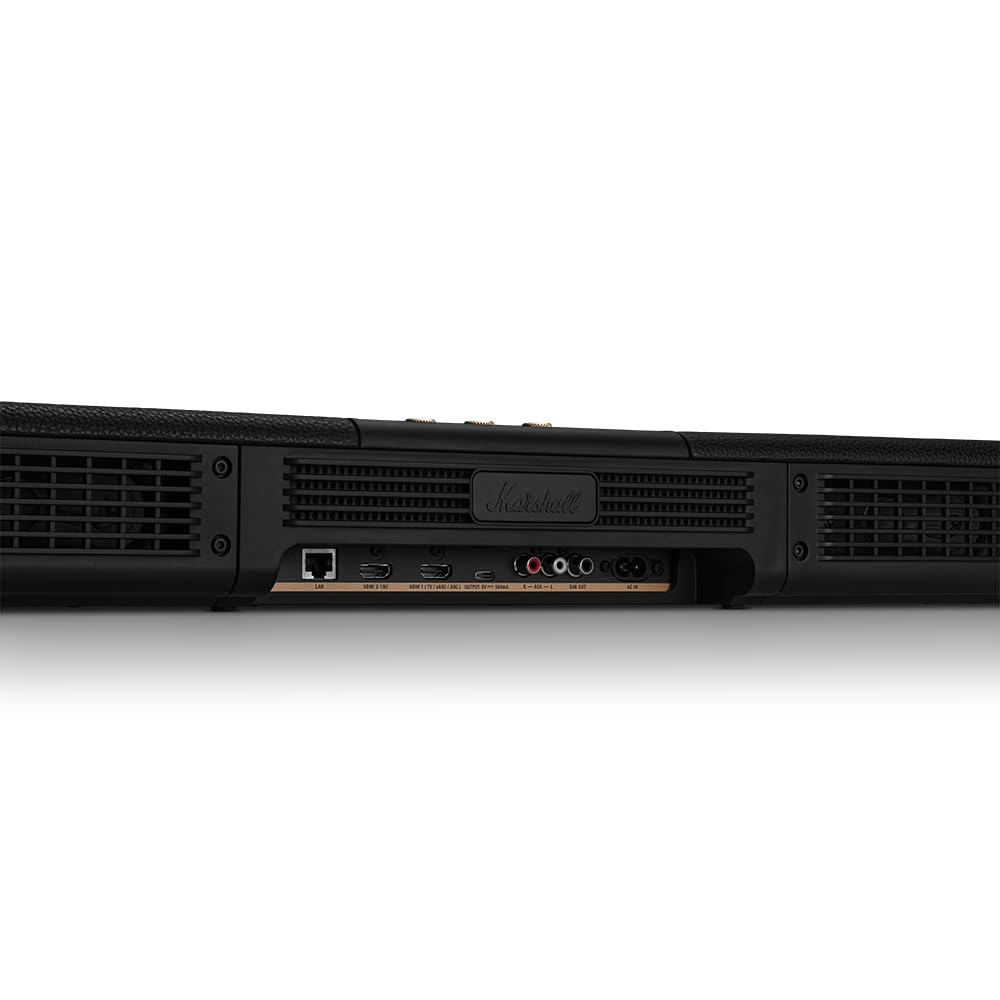
| Wired connectivity | Dual HDMI inputs · RCA audio input |
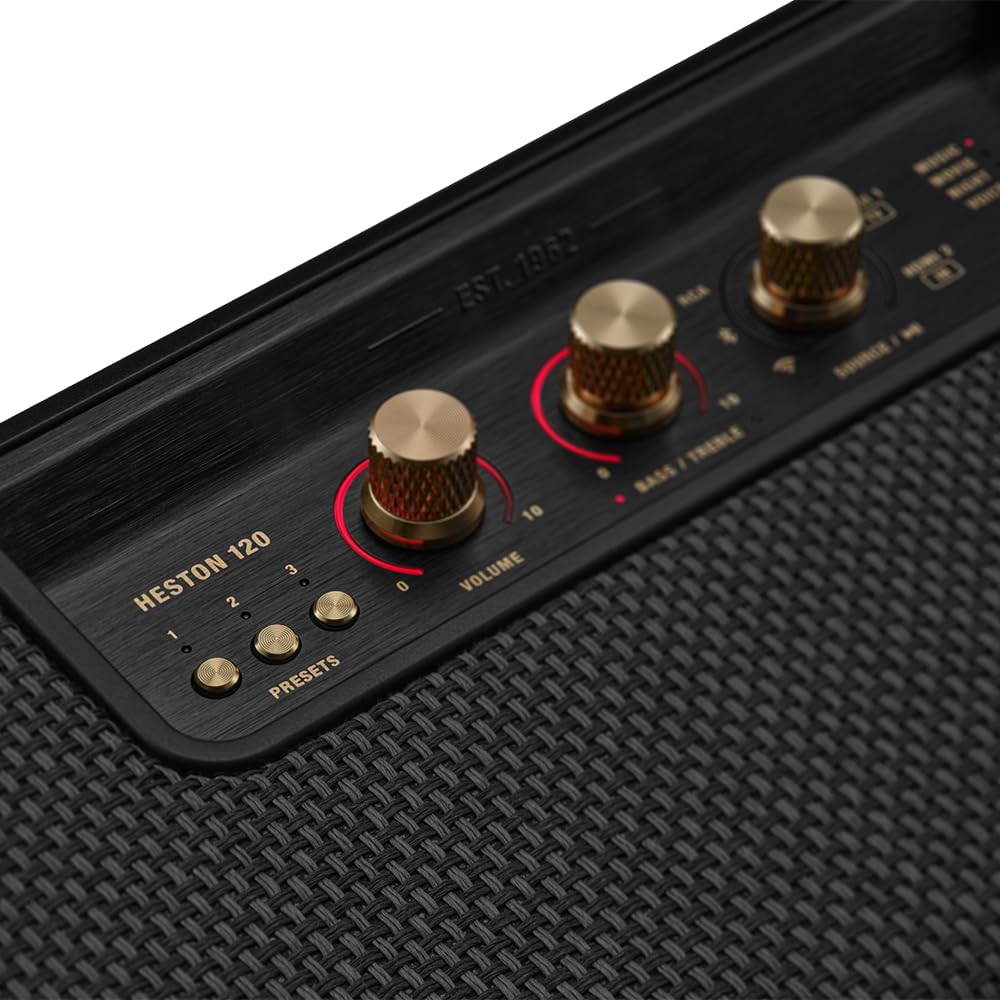
| Sound modes | Movie · Voice · Music · Night |
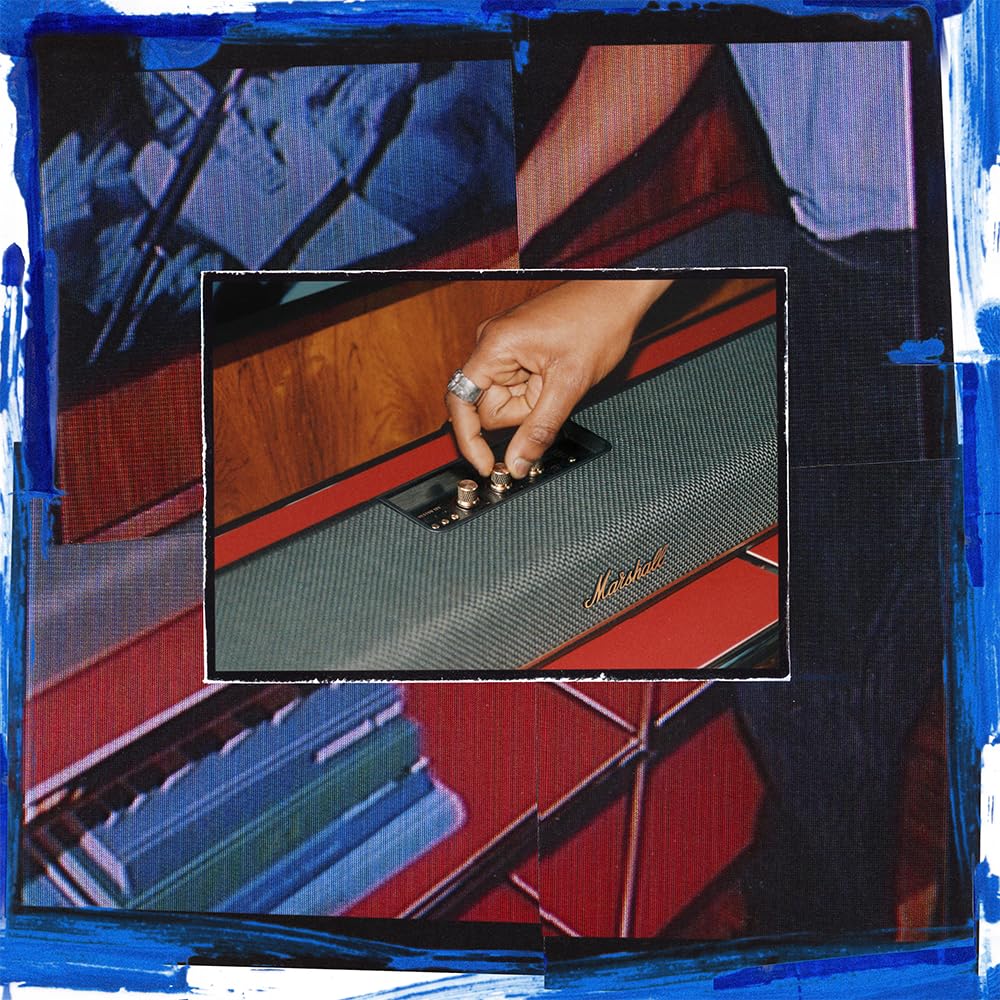
| App control | Marshall App — EQ, room calibration, sound profiles, firmware updates |
| Mounting | Wall Mount ready |
| Dimensions (L×H×D) | 109 × 14 × 7.6 cm |
| Weight | ~2.8 kg |
| Power source | Corded Electric |
| Warranty | Marshall Brand Warranty — verify duration at purchase |
🛡️ Marshall Brand Warranty + Authorised Partner
Dolby Atmos. DTS:X. Dual Sub + 4 Passive Radiators. BT Auracast. Wi-Fi. AirPlay 2. Google Cast. Spotify. Airable. Marshall App. Wall Mount. 109 cm. Order today.
Legendary Marshall acoustics with cinema-grade 3D audio — the most complete soundbar in the Mahajan Electronics range. 24-hour delivery Delhi NCR. GST invoice. Genuine Marshall since 1981.
Warranty duration — verify at purchase. Dolby Atmos and DTS:X performance dependent on source content encoding — not all streaming content carries Atmos/DTS:X tracks. Auracast requires compatible Bluetooth LE Audio receiver devices. Room calibration feature subject to Marshall App version — update firmware after setup. Product image for reference.

IMMERSIVE SOUND FOR MOVIES & MUSIC
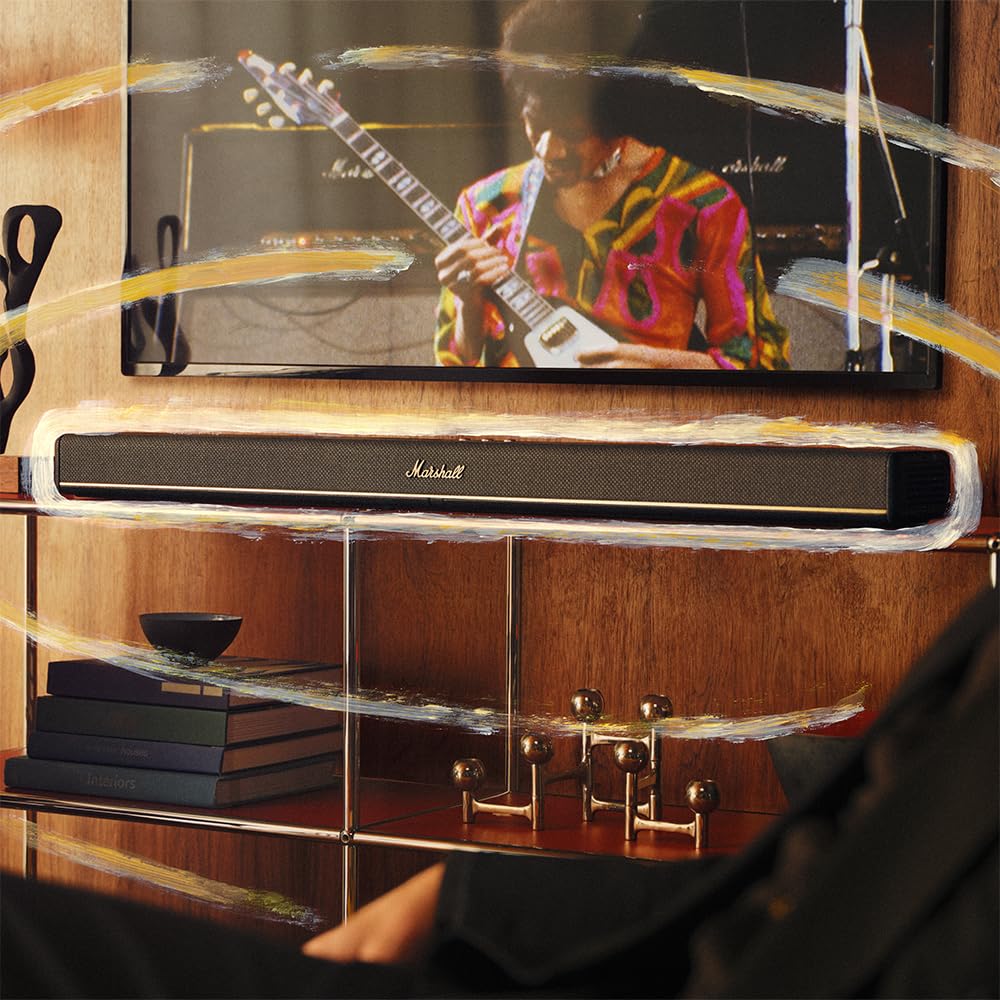
This soundbar will have you feeling every note. Dolby Atmos places you directly inside the action and pushes the audio out into the room.

The image shown is for reference only. The actual serial number and manufacturing date may vary.

