


Description
✅ 2-Year Manufacturer Warranty — Authorised Russell Hobbs Partner · Bajaj Electricals · Mahajan Electronics Since 1981
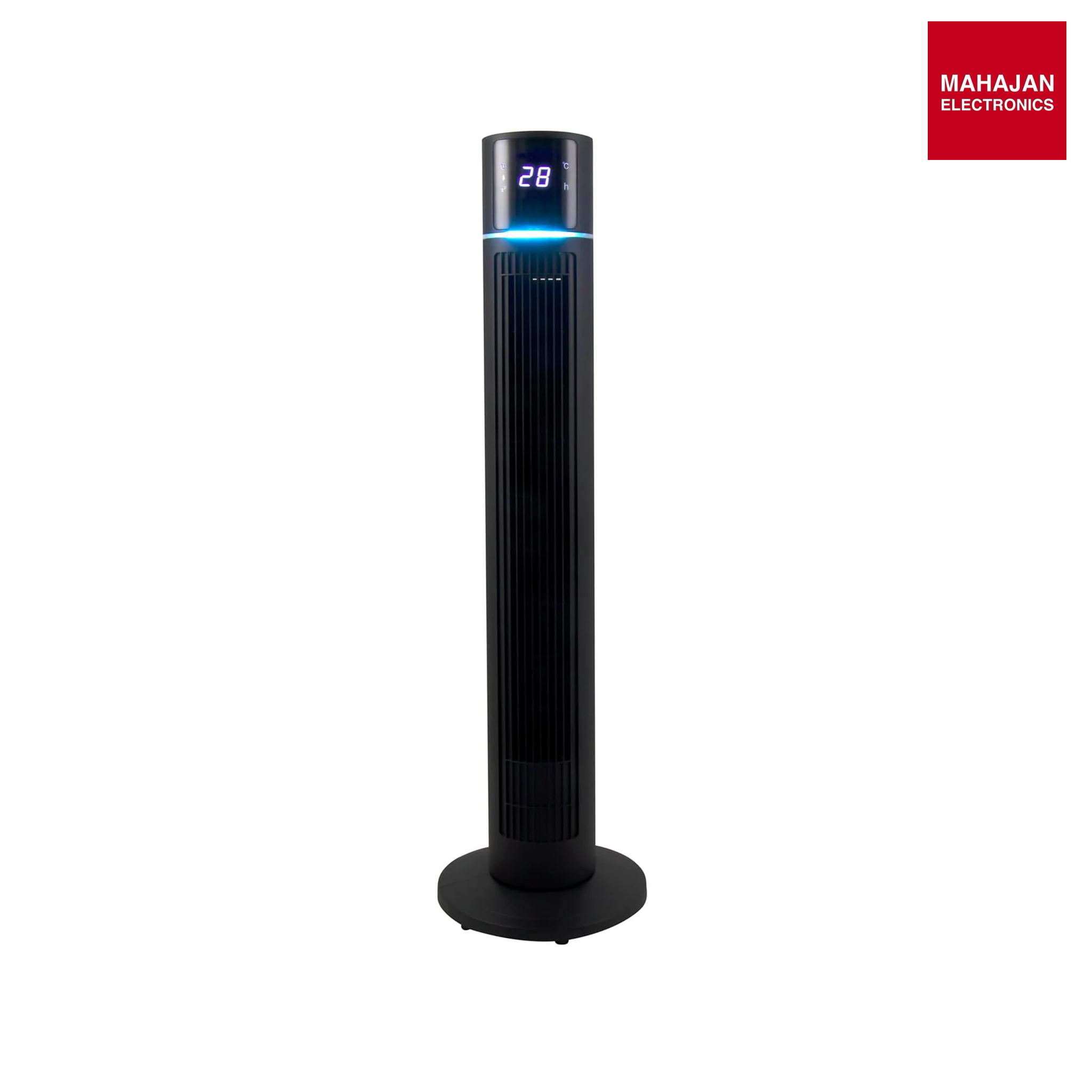
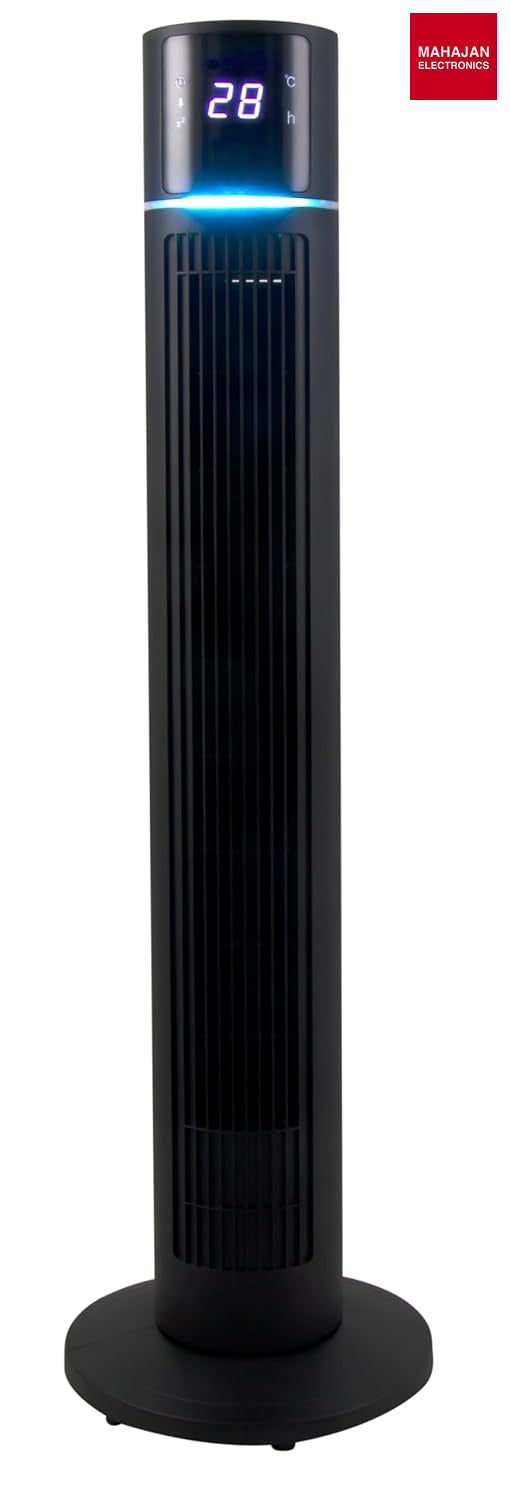
42" tower fan · 60W DC motor · 70° oscillation · 12 speed settings · 4 modes (AI/Natural/Sleep/Normal) · Remote + LED panel · Floor mount · Black · 5kg · RTF4200.
42". 60W DC motor. 70° oscillation.
12 speeds. AI · Natural · Sleep · Normal modes.
Remote + LED. 2-year warranty. Russell Hobbs.
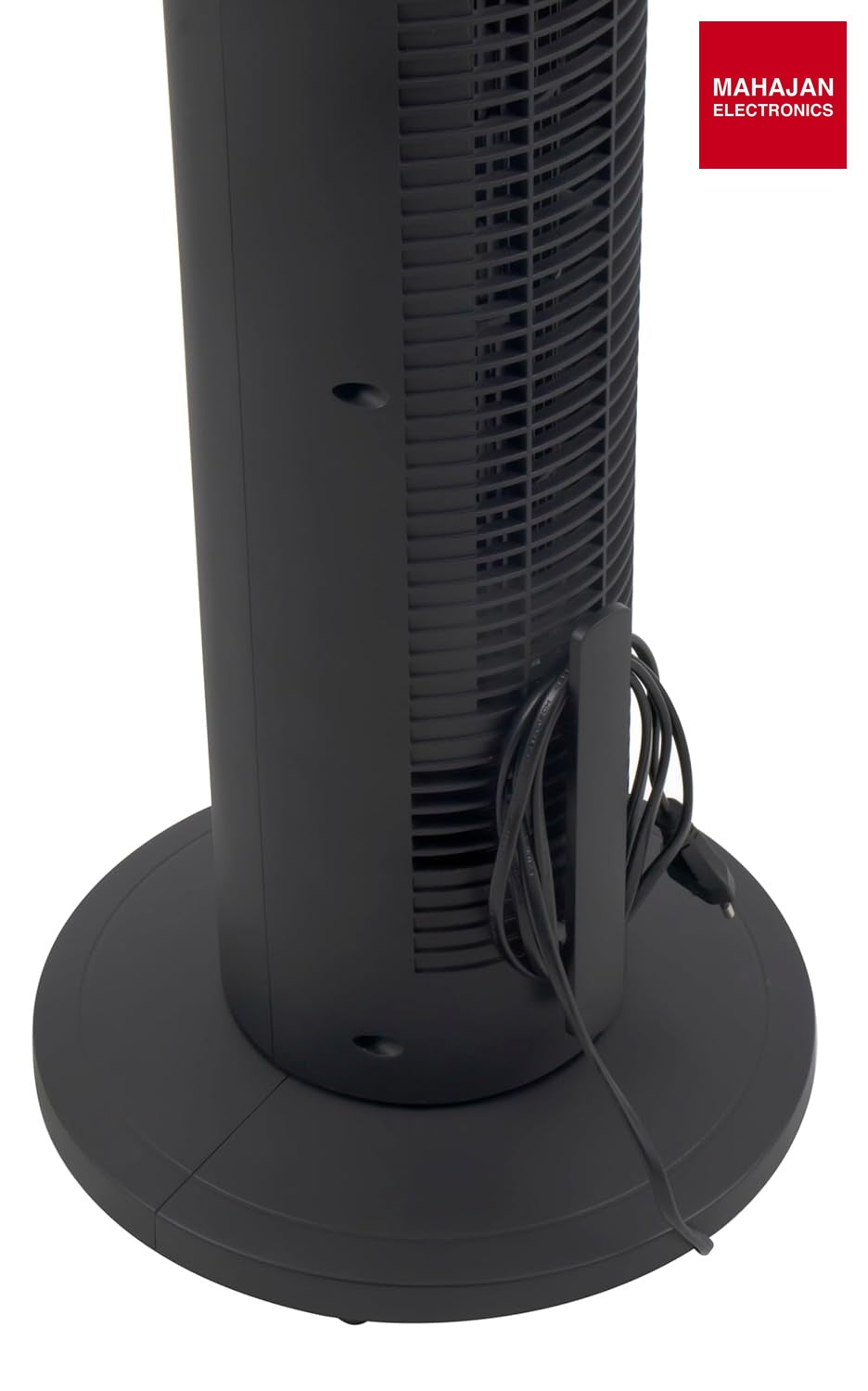
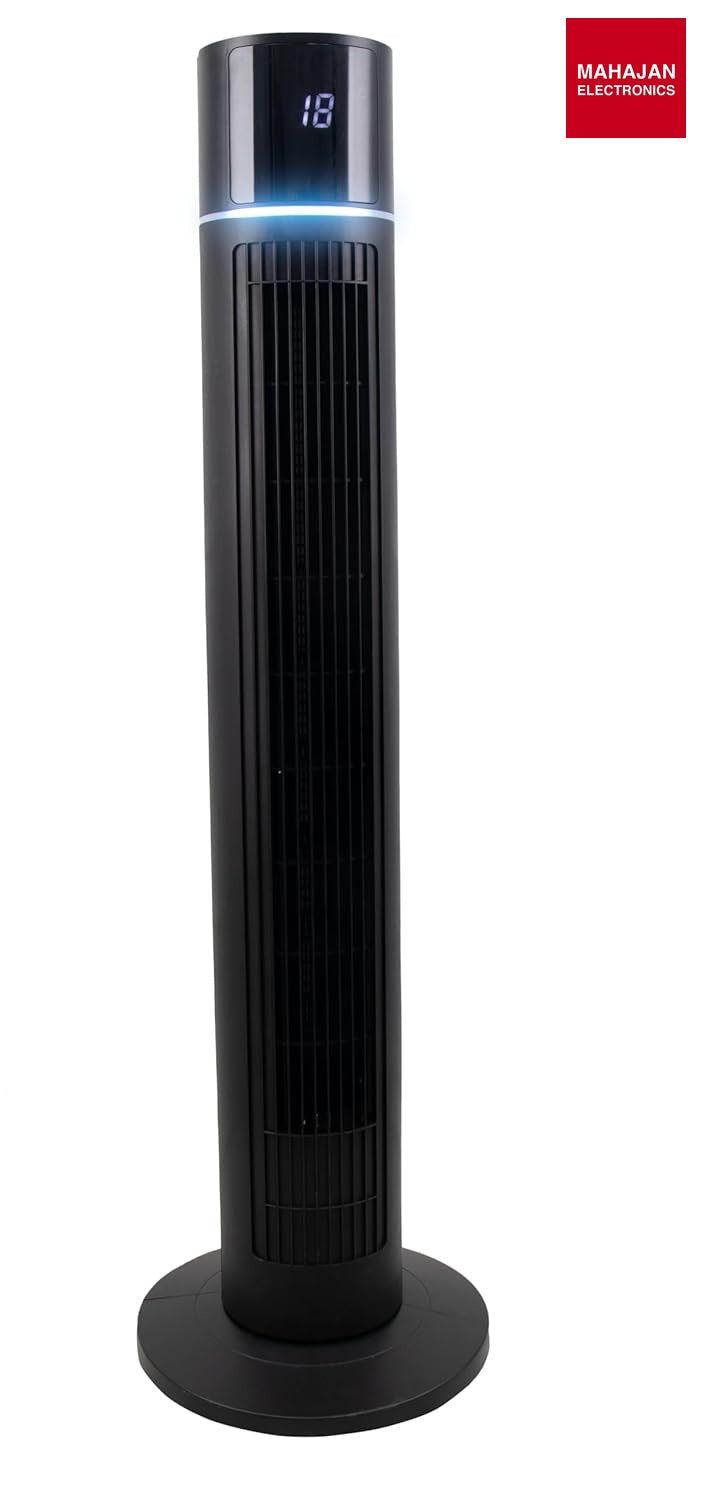
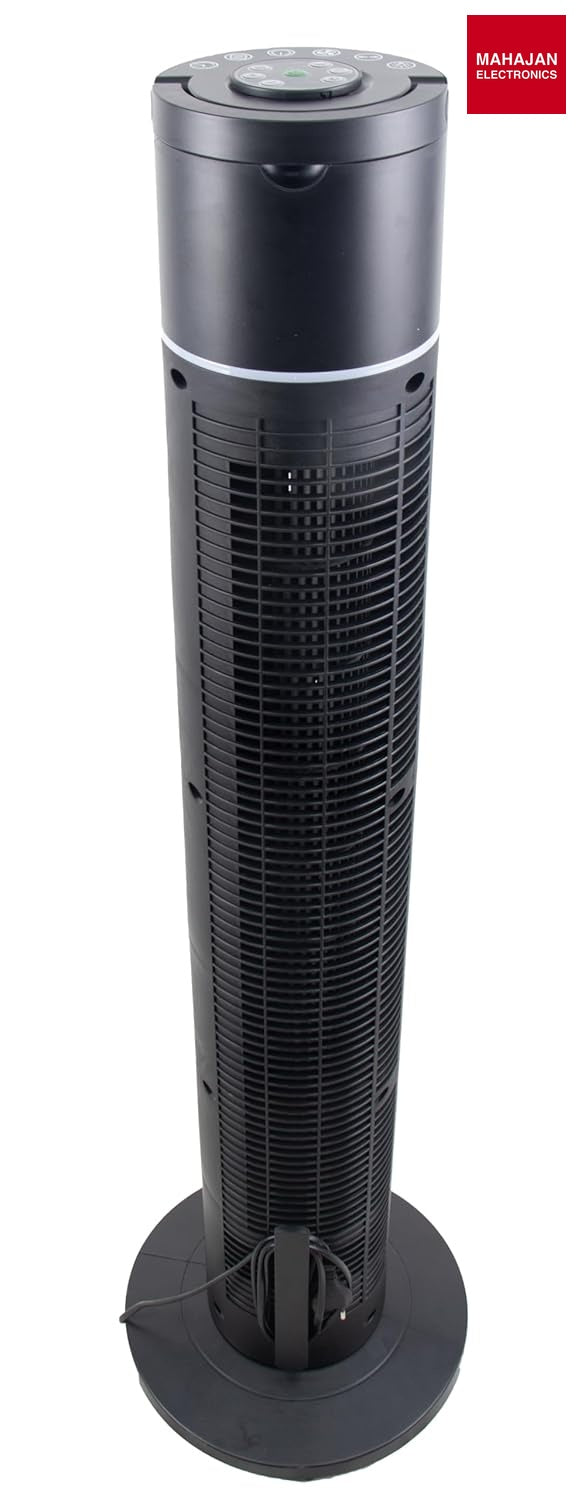
The Russell Hobbs Aero Breeze RTF4200 is a 42-inch premium tower fan with a 60W DC motor for energy-efficient powerful airflow. 70° oscillation covers wide room areas; 12 speed settings allow precise airflow control from gentle sleep-mode breeze to strong daytime cooling. Four intelligent modes including AI Mode (auto-adjusts based on room conditions), Natural (simulated outdoor breeze), Sleep (gradually reduces noise/speed), and Normal (continuous). Remote control + LED display panel. 2-year warranty.
🌀 AI · Natural · Sleep · Normal — four airflow personalities
🧠 AI Mode
Automatically adjusts fan speed based on detected room conditions. Hands-free comfort optimisation — fan increases speed when conditions indicate higher heat load, reduces when comfortable. Verify sensor type at purchase (⚠️ specific sensing mechanism not stated in source).
🌿 Natural Mode
Simulates natural outdoor wind patterns — airflow speed varies rhythmically rather than constant, alternating between gentle and stronger breeze in irregular cycles. More comfortable for extended use than constant-speed airflow; reduces the "wind fatigue" of sustained uniform airflow against exposed skin.
🌙 Sleep Mode
Gradually reduces fan speed (and therefore noise level) over time after activation — allows you to fall asleep at comfortable airflow then reduces to minimal noise as the night progresses. Ideal for light sleepers. Timer compatible for timed shut-off.
💨 Normal Mode
Continuous constant airflow at the selected speed setting. The default operating mode — what you expect from any fan. Maximum airflow consistency for daytime work, cooking, or general room cooling.
🌀 12 speeds — from sleep-mode quiet to full daytime cooling
60W DC motor vs standard AC motors — why DC matters for a tower fan
Most budget and mid-range fans use AC (Alternating Current) induction motors — the standard domestic power supply (230V 50Hz AC) drives the motor directly. AC motors are robust and inexpensive but have two disadvantages for tower fan applications: they operate efficiently only at the frequencies that their winding design is optimised for (typically 50Hz for Indian grid), making variable-speed operation inefficient — reducing speed by dropping supply voltage wastes power as heat in the winding rather than converting it to useful mechanical work; and their speed is closely tied to grid frequency, producing constant-speed operation that limits the nuance of speed control. DC (Direct Current) motors used in tower fans receive DC power from an internal rectifier/converter circuit, and their speed is controlled by varying the DC voltage applied to the windings — a fundamentally more efficient speed control mechanism because voltage variation directly reduces motor input power rather than dissipating it as heat. The practical benefits of the RTF4200's 60W DC motor: at low speed settings (Sleep mode, speeds 1–4), a DC motor draws significantly less electricity than an AC motor running at equivalent RPM reduction — a DC fan at minimum speed may draw 5–10W vs 30–40W for an AC fan achieving similar RPM reduction. This makes the 12-speed range meaningful in terms of electricity consumption variation rather than just noise variation. Additionally, DC motors typically produce less electromagnetic interference at variable speeds, contributing to the quieter operation at low speeds. The 60W maximum rating is the peak power consumption at Speed 12 — actual consumption at typical operating speeds (4–8 for most use cases) will be substantially lower.
70° oscillation + tower fan column design — how airflow coverage works differently from pedestal fans
Tower fans differ from pedestal (standing) fans in their airflow mechanism — a pedestal fan uses a propeller blade assembly that produces a circular, concentrated airflow column directed forward from the propeller plane, with airflow concentrated in a cone of approximately 30–45° divergence from the axis. A tower fan uses a cross-flow fan (a cylindrical drum with forward-curved blades running the full height of the fan column) that draws air in from the sides of the column and discharges it through a slot along the front face of the column. This slot discharge produces a broad, flat sheet of airflow across the full 42-inch (approximately 107cm) height of the fan — the entire vertical column of the room from floor level to approximately 107cm is covered by the fan's discharge simultaneously, rather than the single-point discharge of a propeller fan. This full-height discharge is the tower fan's primary advantage over pedestal fans for room coverage: a single tower fan placed centrally covers the sitting and standing occupant's full body height rather than primarily their upper body. The 70° oscillation — the horizontal arc across which the fan pivots — sweeps this full-height air column across a wide angle. At typical room placement distances (1.5–2.5 metres from occupants), 70° oscillation at 2 metres covers approximately 2.4 metres of horizontal width (2m × tan(35°) × 2 = approximately 2.8m total width sweep) — sufficient to cover a small room's occupant zone in a single oscillation sweep. The combination of 107cm height coverage × 70° oscillation produces a coverage "curtain" rather than a focused jet, distributing airflow more uniformly across the room than a directional propeller fan.
Natural Mode simulation + Sleep Mode gradual reduction — why these two modes improve comfort over standard fan operation
Natural Mode addresses a physiological comfort characteristic of sustained airflow: outdoor wind is not constant-velocity — it varies in speed with a characteristic power spectrum that includes slow fluctuations (gusts), medium fluctuations (turbulence), and rapid fluctuations (eddies). Human skin receptors respond to airflow changes rather than absolute airflow velocity — the sensation of "cooling breeze" is partly driven by the dynamic change in airflow velocity over the skin's evaporative cooling layer. Constant-velocity airflow (as produced by Normal mode) initially feels refreshing but becomes monotonous over time — the skin's sensory adaptation reduces the perceived cooling sensation as the velocity pattern becomes predictable. Natural Mode varies fan speed in an irregular pattern that mimics real outdoor wind fluctuation, preventing sensory adaptation and maintaining the perceived freshness of the airflow over extended periods. This is particularly relevant for sleep use (where the fan may run for 6–8 hours) and work-from-home environments where the fan runs through the day. Sleep Mode's gradual speed reduction serves a different comfort objective: sleep research indicates that room temperature and airflow are most important for sleep onset (falling asleep requires the body's core temperature to drop, aided by airflow over skin) but less critical for sustained sleep maintenance once sleep is established. Running a fan at the same speed all night that helped sleep onset may be noisier than needed once sleep is established. Sleep Mode typically begins at the set speed level and progressively reduces fan speed over 1–2 hours, reaching a minimal-noise low speed for the main sleep period. The remote control's timer function allows the fan to switch off entirely after a set period — further reducing nighttime noise after the body's cooling requirement is met.
🆚 Tower fan vs split AC vs ceiling fan — when a tower fan is the right choice
RTF4200 Tower Fan
- No installation — plug and use
- 60W — very low electricity cost
- Portable — move room to room
- Full-height airflow column
- Cools by evaporation, not temperature reduction
- No cooling below ambient temperature
- Best for: 28–36°C range comfort, portability, low cost
Split AC (alternative)
- Permanently installed
- 1000–2500W — significant electricity cost
- Fixed to one room
- Reduces room temperature below ambient
- Best for: 38°C+ peak summer, humidity control
Ceiling Fan (alternative)
- Permanently installed
- 70–80W — similar electricity to tower fan
- Full-room air circulation from above
- No height-targeted airflow
- Best for: all-room circulation, 24/7 base cooling
⚙️ All Features
60W DC Motor
Energy-efficient · variable speed · low noise
70° Oscillation
Wide horizontal sweep — even room coverage
12 Speed Settings
Precise from whisper to full power
AI Mode
Auto-adjusts to room conditions
Natural Mode
Variable speed simulates outdoor breeze
Sleep Mode
Gradually reduces speed and noise overnight
Remote Control
Full control from across the room
LED Display Panel
Speed, mode, timer visible at a glance
🎯 Ideal for
| Brand | Russell Hobbs (Bajaj Electricals Ltd) |
| Model | RTF4200 · Aero Breeze |
| Type | 42-inch Tower Fan (Floor Mount) |
| Power | 60 Watts (DC Motor) |
| Oscillation | 70° |
| Speed settings | 12 |
| Modes | AI · Natural · Sleep · Normal |
| Controls | Remote Control + LED Panel |
| Timer | Yes (via remote) |
| Colour | Black |
| Weight | 5 kg |
| Warranty | 2-Year Manufacturer Warranty |
🛡️ 2-Year Warranty + Authorised Partner
42". 60W DC Motor. 70° Oscillation. 12 Speeds. AI + Natural + Sleep + Normal. Remote. LED Display. 2-Year Warranty ✅. Black. Order today.
Premium smart tower cooling for Delhi NCR bedrooms, offices, and living rooms — 12-speed precision, Natural Mode breeze, Sleep Mode quiet overnight. 24-hour delivery. GST invoice. Genuine Russell Hobbs — Mahajan Electronics since 1981.
Please Note: The image shown is for reference purposes only. Actual product details, including the serial number and manufacturing date, may vary.

